
Highway Pilot
Exploring automated driving through research, driving-state communication and interface concepts.
- Focus
- Automated driving
- Context
- Future Visualization UX/UI
- Scope
- Research, driving-state communication & HMI
- Company
- Bosch
Future experience · Automated-driving research and concepts
- My contribution
- I contributed to research, interaction principles and HMI development within my Bosch automotive work.
- Key decisions
- Use research and interaction principles to connect automation-state communication with the driver’s information needs.
- Delivery & outcome
- Research-informed interaction and HMI proposals for communicating highway-automation states.
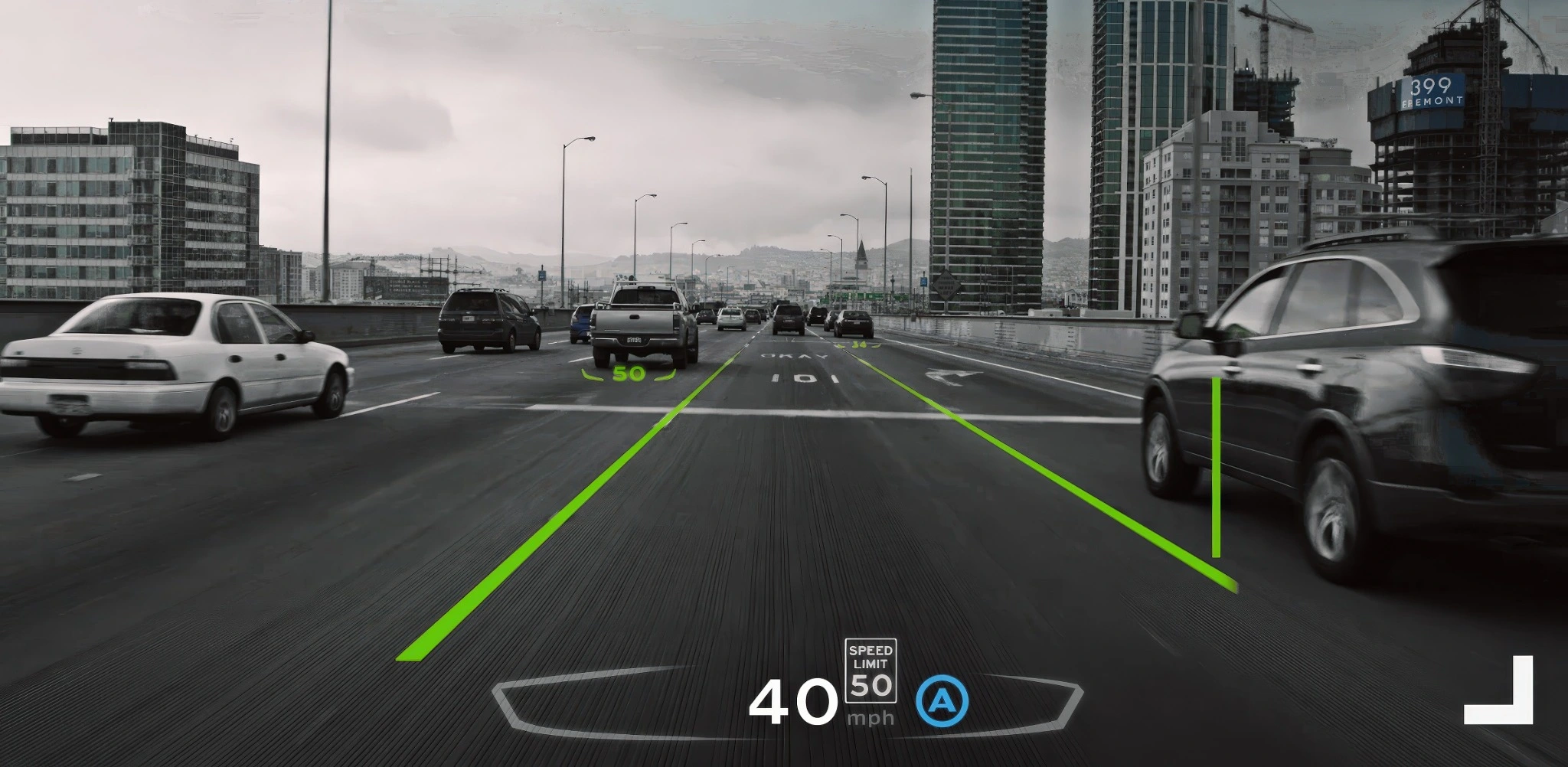
Connect automation behavior
with driver understanding.
As the vehicle takes on more of the driving task, people need to understand its state and their role. The challenge was to connect a long-term automation vision with interaction questions that could be explored in a nearer-term highway concept.
Make the state changes
part of the design discussion.
I translated research findings into opportunity areas and interaction principles before developing the interface proposals. This gave the work a shared basis for discussing what the driver needed to know in each situation.
Wireframes, display studies and steering-wheel concepts made driving-state communication tangible. I used them to connect the proposed automation experience with the information and interactions it required.
An HMI direction
for highway automation.
The resulting proposals brought together driving-state indicators, cluster and central-display layouts, navigation and steering-wheel concepts.
The research and development sequence remains separate from the CES 2016 demonstrator.
Selected evidence
Research, interaction principles and interface concepts for communicating automated-driving states.