
CES 2016
Making a connected-vehicle vision tangible through interfaces, physical components and an immersive demonstrator.
- Focus
- Connected-vehicle vision
- Context
- Future Visualization UX/UI
- Scope
- Interface, visual & demonstrator design
- Company
- Bosch
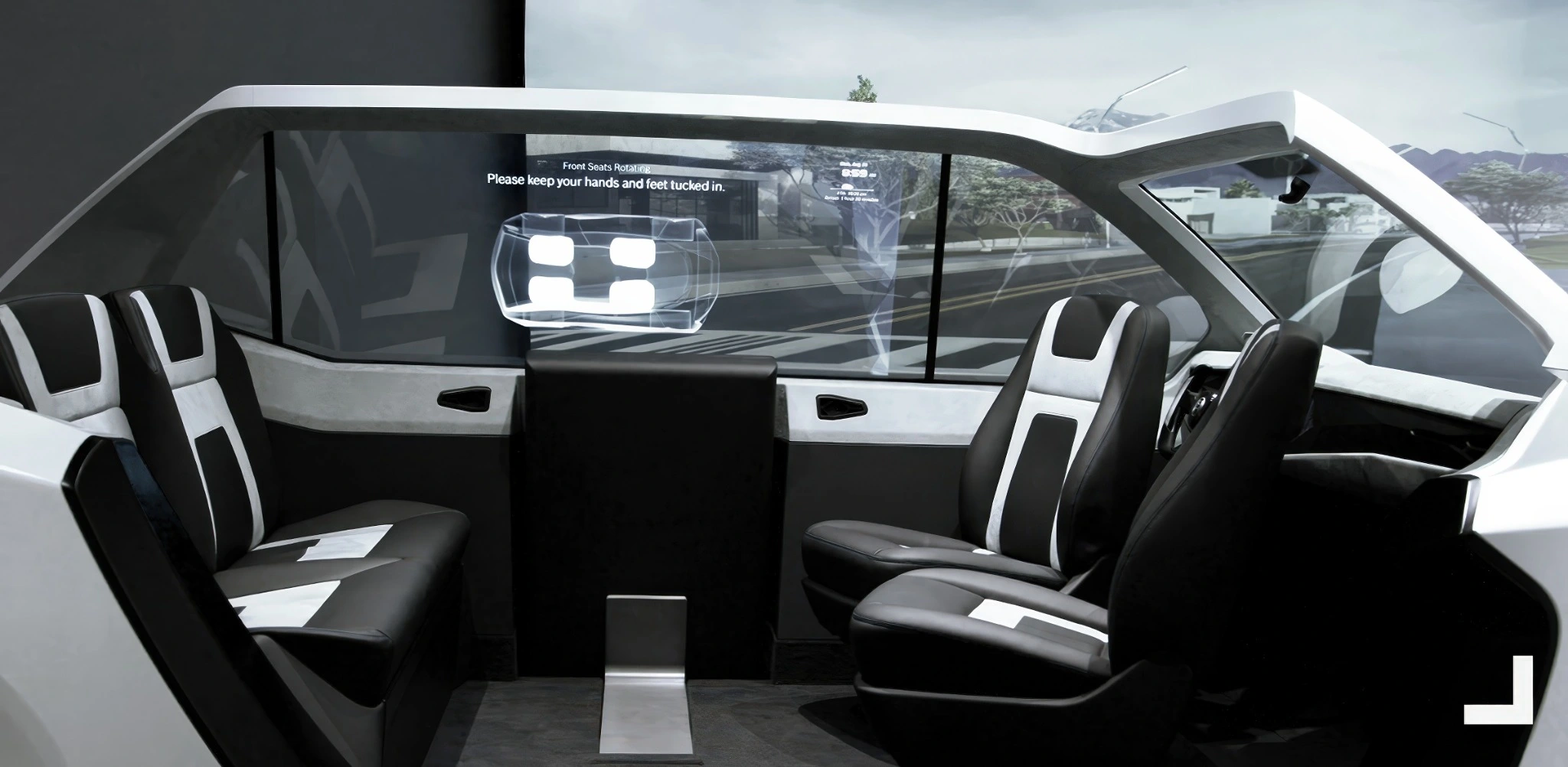
Demonstrator · Bosch connected-vehicle vision at CES 2016
- My contribution
- I contributed to interface, visual and demonstrator design within my Bosch automotive work.
- Key decisions
- Align screens and physical components around shared demonstration scenarios.
- Delivery & outcome
- Contribution to the Bosch connected-vehicle demonstrator at CES 2016, with interface scenarios and holographic animation.
Connect the vision
across a demonstrator.
Bosch’s CES 2016 vision needed to make manual and partially automated driving understandable across screens and physical components. The challenge was to make the individual touchpoints support a coherent demonstration.
Use the scenarios
to align the touchpoints.
I connected interface, visual and demonstrator work around the driving scenarios. That kept the cluster, head unit, side windows, mobile app and multi-touch table related to the same experience.
The scenarios and animations made the proposed interactions visible for review. They helped connect the individual components with how the connected-vehicle vision would be presented.
A connected experience
demonstrated at CES.
The work contributed to the Bosch connected-vehicle demonstrator at CES 2016 through interface scenarios, physical components and holographic animations.
The demonstrator made the future experience tangible and remains a separate project from Highway Pilot.
Selected evidence
Interaction, visual and physical components of the Bosch connected-vehicle demonstrator.