
Faraday Future
As Creative Manager UX/UI, I helped connect the FF91 in-car and mobile experiences through a shared visual language.
- Role
- Creative Manager UX/UI
- Company
- Faraday Future
- Focus
- Connected vehicle experience
- Scope
- HMI, mobile & visual language
Experience development · FF91 in-car and mobile
- My contribution
- I helped connect the in-car and companion mobile work around shared experience and brand principles.
- Key decisions
- Review touchpoints together and adapt the shared direction to the different needs of drivers, passengers and mobile interactions.
- Delivery & outcome
- A coordinated FF91 cabin and mobile experience direction, documented through interface and vehicle-presentation studies.
Different seats.
A connected experience.
FF91 needed to support the different needs of drivers and passengers while connecting the cabin with companion mobile interactions. The challenge was to establish a shared direction across those touchpoints without assuming that every screen or situation should work in the same way.
Agree on the principles.
Apply them to each context.
I helped connect the in-car and mobile work around shared experience and brand principles. We considered the information and controls each situation needed, then used the design studies to discuss how those requirements could fit within one system.
Reviewing the touchpoints together made overlaps and differences visible. I helped carry the agreed direction across passenger entertainment, onboarding and mobile vehicle controls while preserving the purpose of each interaction.
A coordinated direction
across cabin and mobile.
The work resulted in in-car interface studies and companion mobile proposals covering onboarding, energy, climate and vehicle controls. The collection shows a shared experience direction adapted to different driver and passenger contexts.
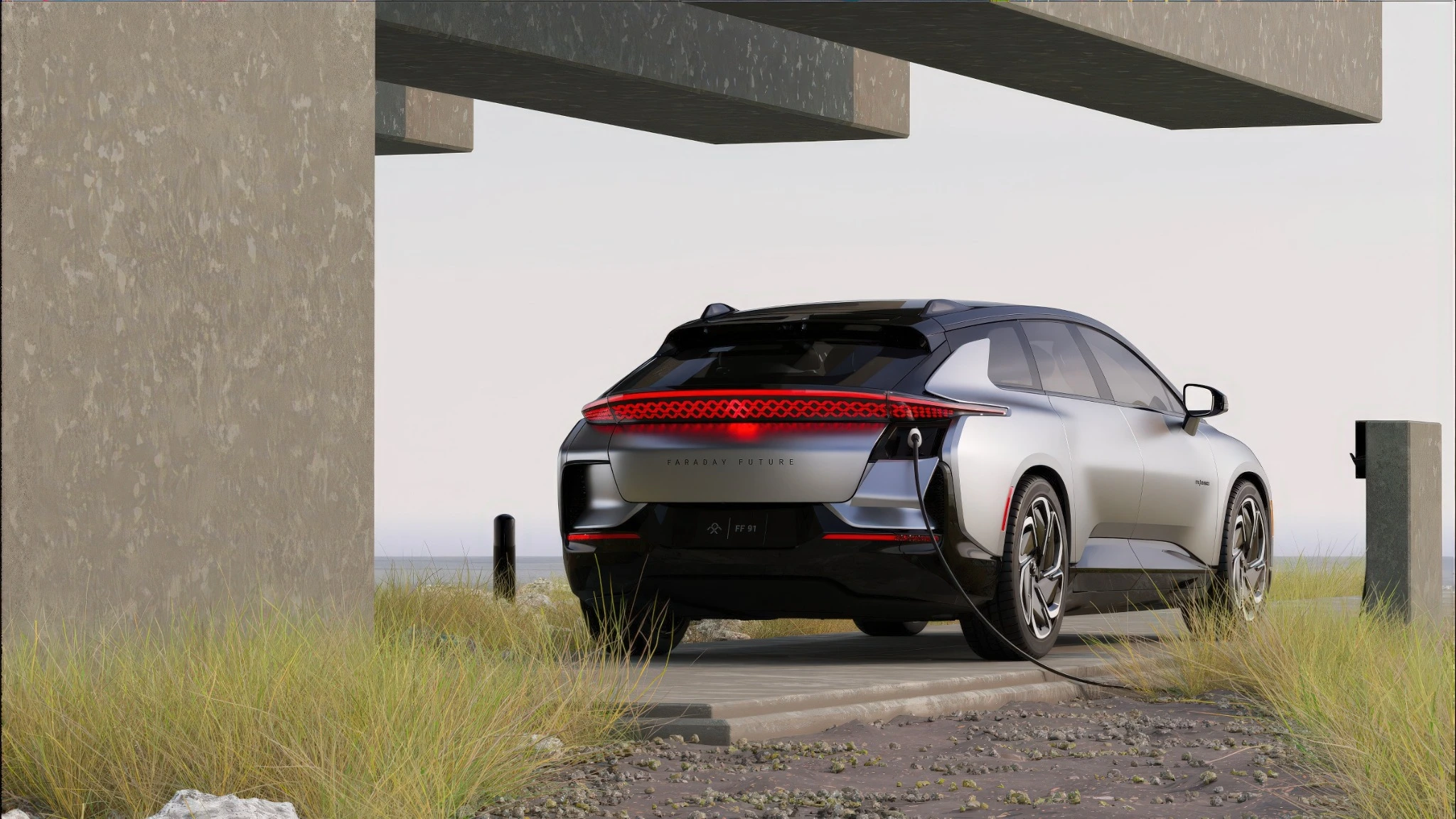
The wider vehicle presentation extends that direction beyond an individual screen. Alternative studies remain part of the documented development.
Selected evidence
A shared visual language applied to the cabin, companion mobile experience, vehicle graphics and lighting.
See more · 26 imagesSee fewer images
In-car experience
Interface language
Mobile experience
Visual direction & language
Vehicle visualization
Vehicle lighting
Motion & demonstrations.
A journey built
around the people.
Speculative transportation concept · Faraday Future
An on-demand mobility vision connecting online ordering, a configurable Cocoon cabin and an autonomous chassis with the different needs of a family traveling to meet in San Francisco.
Two starting points.
One family journey.
Susan, a working mother in Los Angeles, wants to meet her father John and her son Jason in San Francisco. John and Jason live in Seattle. Their trips share a destination, but the time on the road needs to serve different purposes: work for Susan, and comfort, rest and entertainment for her family.
The concept asks how an on-demand transportation service could support that whole experience, from ordering and configuring a vehicle to staying connected during the trip and arranging the return home.
Start with the journey.
Connect the system.
I used the family’s parallel journeys to connect the service, cabin and interaction ideas. Susan orders transport online for John and Jason; a purpose-configured Cocoon cabin is assembled onto an autonomous chassis at a remote facility. The cabin’s environment and interactive surfaces then adapt to what its passengers want to do.
The storyboard follows the experience across touchpoints: exterior arrival information, an in-car video call, a familiar environment for Jason, immersive play, a mobile workspace for Susan and autonomous parking and pickup. The vision board establishes interaction references for gesture, recognition, tactile response, light and transparency.
A future experience
made tangible.
The resulting vision board and twelve-step storyboard bring the proposal into one connected story. They explore a customizable cockpit, virtual and augmented reality, interactive windows and a drone-based charging service envisioned to recharge the vehicle en route without a stop.
John and Jason travel south while Susan heads north; the service supports their meeting in San Francisco and John and Jason’s return to Seattle. The boards make the relationships between passenger needs, vehicle configuration and the wider service available for discussion and further exploration.